The classic 3×3 is only the beginning. Once you can solve it, a whole family of puzzles becomes accessible because they share the same core logic. This guide explains the main types of Rubik's Cubes, how they differ, how hard each one is, and which one you should try next.
Solved one cube? Try another.
Use Rubik's Cube Solver to get step-by-step guidance for 2×2, 3×3, and 4×4 cubes.
What Is a Rubik's Cube, Exactly?
A Rubik's Cube is a twisty puzzle: a mechanical puzzle made of pieces that turn around one or more axes. The classic 3×3 has six faces, each with nine stickers or coloured tiles, and the goal is to return every face to a single colour after the cube has been scrambled. Every puzzle in this family follows the same basic idea: twist the layers, scramble the pieces, then restore order using a sequence of moves.
The original 3×3 was invented in 1974 by Ernő Rubik, a Hungarian professor, as a teaching tool for three-dimensional geometry. It became a worldwide toy phenomenon in the early 1980s and has remained popular ever since. Today, the twisty-puzzle family includes dozens of official and unofficial designs, from tiny keychain cubes to giant puzzles with hundreds of pieces.
Cube Anatomy: Corners, Edges, and Centres
To understand why cubes behave differently, it helps to know the three kinds of pieces. Corner pieces have three coloured faces and sit at the corners of the cube. Edge pieces have two coloured faces and sit between two corners. Centre pieces have one coloured face and sit in the middle of each face.
On a 3×3, the centres are fixed relative to each other, which is why the colour scheme never changes: white is always opposite yellow, blue opposite green, and red opposite orange on a standard cube. Corners and edges move around these fixed centres. On a 2×2, there are no edges or centres at all — only eight corners — which is why it behaves like the corner-only portion of a 3×3.
The Standard Sizes: 2×2 to 5×5
The numbered cubes — 2×2, 3×3, 4×4, 5×5 — are the backbone of the hobby. Each size adds new pieces and new ideas, but they all build on the same foundations.
2×2 — Pocket Cube
The 2×2 has eight corner pieces and nothing else. Because there are no edges or centres, it is the simplest standard cube, and most people can learn to solve it quickly once they know a 3×3. In fact, a 2×2 is solved exactly like the corners of a 3×3: orient the corners, then permute them. It is a good first puzzle for children and a good warm-up for anyone learning full 3×3 methods.
Despite its simplicity, the 2×2 is a real speedcubing event with its own techniques. Fast solvers use methods that solve the whole cube in very few moves, and because the puzzle is small, lookahead and finger speed matter more than memorising long sequences.
3×3 — The Classic
The 3×3 is the original Rubik's Cube and the reference point for everything else. It has eight corners, twelve edges, and six centres — 26 visible pieces in total — and more than 43 quintillion possible scrambles. That enormous number is why solving it requires a method rather than trial and error: no one can stumble on a solution by turning faces at random.
Beginners usually learn the layer-by-layer method: solve the white cross, then the white corners, then the middle layer, then the yellow face, and finally the last layer. More advanced solvers use methods like CFOP, which add more algorithms but solve the cube much faster. Whatever method you choose, the 3×3 teaches the ideas — orientation, permutation, and working in stages — that every other cube reuses.
4×4 — Rubik's Revenge
The 4×4 has no fixed centres, which changes the puzzle in an important way: the centres themselves must be solved, and they can end up in any arrangement. It also introduces parity — situations that cannot happen on a 3×3, such as a single edge flipped or two edges swapped. Parity cases need special algorithms, but once you know them, the rest of the solve uses the same ideas as a 3×3.
Most solvers use the reduction method on the 4×4: first pair up the centres, then pair up the edges, and finally solve the resulting puzzle as if it were a 3×3. Reduction is the key idea behind all even-layered cubes, and learning it on the 4×4 unlocks every larger cube.
5×5 — Professor's Cube
The 5×5 combines the challenges of the 3×3 and the 4×4. It has fixed centres, like a 3×3, but also movable centre pieces and paired edges that must be grouped before the final solve. Because the centres are fixed, the 5×5 has no parity cases of the kind found on the 4×4, which makes it feel more orderly even though it has more pieces.
Solving a 5×5 takes longer than a 3×3, mostly because the reduction stage — building centres and pairing edges — has more steps. Patience matters more than speed here: work methodically through the centres and edges, and the final 3×3 stage will feel familiar.
6×6, 7×7, and Beyond
Cubes larger than 5×5 exist and follow the same reduction logic: build the centres, pair the edges, then solve as a 3×3, handling parity where it appears. They take much longer to solve and demand more patience, but they do not require fundamentally new ideas. Beyond 7×7, puzzles become collector's items — impressive to look at, heavy to hold, and slow to turn — but the solving principles stay the same.
Shape Mods: Same Logic, Different Shapes
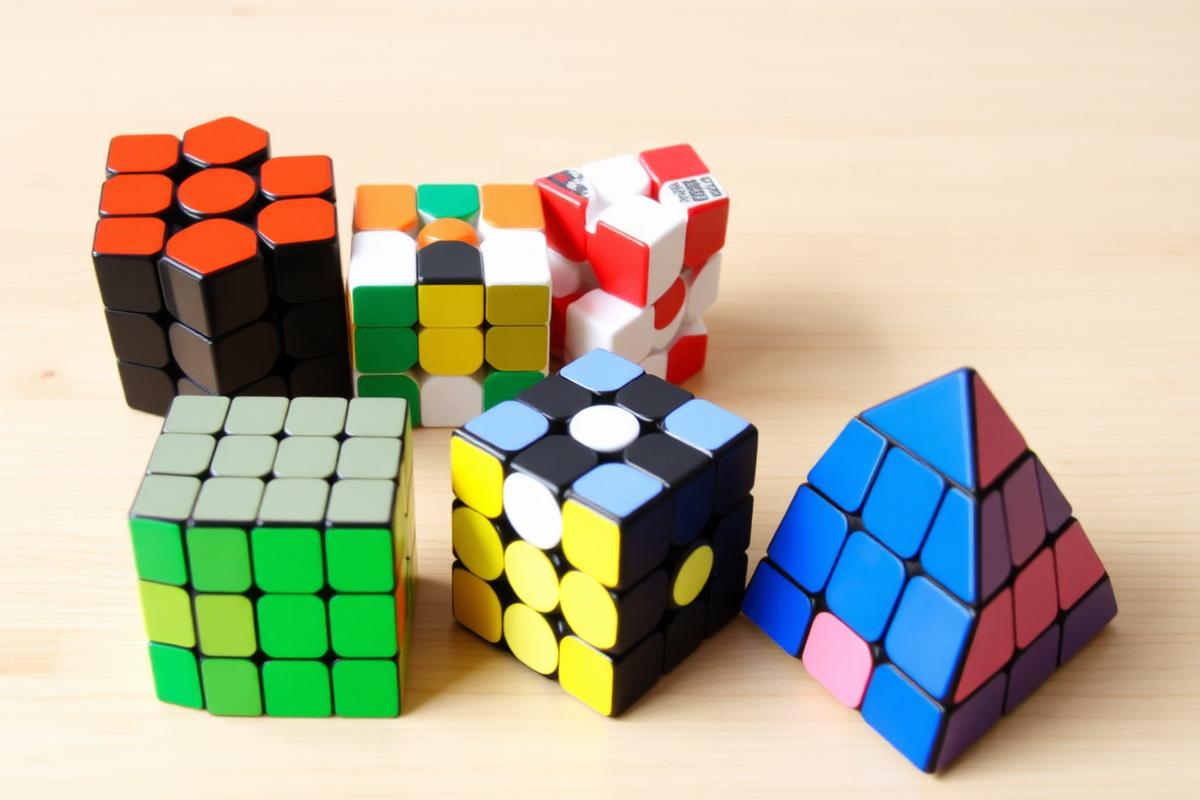
Shape mods keep the mechanism of a standard cube but change the shape of the pieces, so the puzzle changes shape as you turn it. They look harder than they are: because the mechanism is familiar, many shape mods are easier than a 3×3 once you understand what each piece represents.
Pyraminx
The Pyraminx is a tetrahedron — a pyramid with four triangular faces. It has four corner pieces and edge pieces, and it turns on axes that pass through its corners. Because it has fewer pieces and a simpler structure, the Pyraminx is one of the easiest twisty puzzles to learn, and it is a popular speedcubing event. If you want a quick win after the 3×3, the Pyraminx is a good choice.
Skewb
The Skewb looks like a cube, but it turns around its corners rather than its faces. Each turn rotates four corners at once, which gives it a very different feel from a 3×3. The Skewb has only eight corner pieces and six square centre pieces, and it is considered one of the easiest twisty puzzles. Beginners often enjoy it because a full solve takes relatively few moves.
Megaminx
The Megaminx is a dodecahedron — a puzzle with twelve pentagonal faces. It works like a 3×3 extended to twelve faces: it has fixed centres, edges, and corners, and it is solved with the same layer-by-layer thinking. The main challenge is keeping track of so many faces and pieces. A Megaminx solve takes much longer than a 3×3, but solvers often say the method itself is not much harder — it is the scale that makes it demanding.
Mirror Cube
The Mirror Cube is a 3×3 in disguise. All of its stickers are the same colour, and the pieces have different sizes, so you solve it by shape instead of colour. Mechanically it is identical to a 3×3 — every Mirror Cube move is a 3×3 move — but the solving experience feels completely different because you must recognise pieces by their shape and orientation.
Square-1
The Square-1 is the odd one out: it can change shape mid-solve, turning from a cube into irregular shapes that must be restored before the puzzle can be finished. Its pieces are kite-shaped and triangular, and its moves are unlike any standard cube. The Square-1 is considered one of the harder twisty puzzles, and it rewards solvers who enjoy unusual mechanisms.
Difficulty: Which Cubes Are Easiest and Hardest?
Difficulty is partly personal — some people find shape recognition easy and parity confusing, while others feel the opposite. As a rough guide, though, most solvers would order the common puzzles like this, from easiest to hardest.
- Easiest: Pyraminx and Skewb — few pieces, short solves.
- Easy to moderate: 2×2 and Mirror Cube — familiar 3×3 logic in a different form.
- Moderate: 3×3 — the baseline every other puzzle is measured against.
- Harder: 4×4 and Megaminx — more pieces and longer solves, with parity on the 4×4.
- Hardest: 5×5, 6×6 and beyond, and Square-1 — long solves or unusual mechanisms.
This order is a guide, not a rule. A solver who enjoys long, methodical puzzles may find a 5×5 relaxing, while a solver who likes quick pattern recognition may find the Pyraminx more fun than the 3×3. Try a few and see which ones suit you.
Do Bigger Cubes Use the Same Notation?
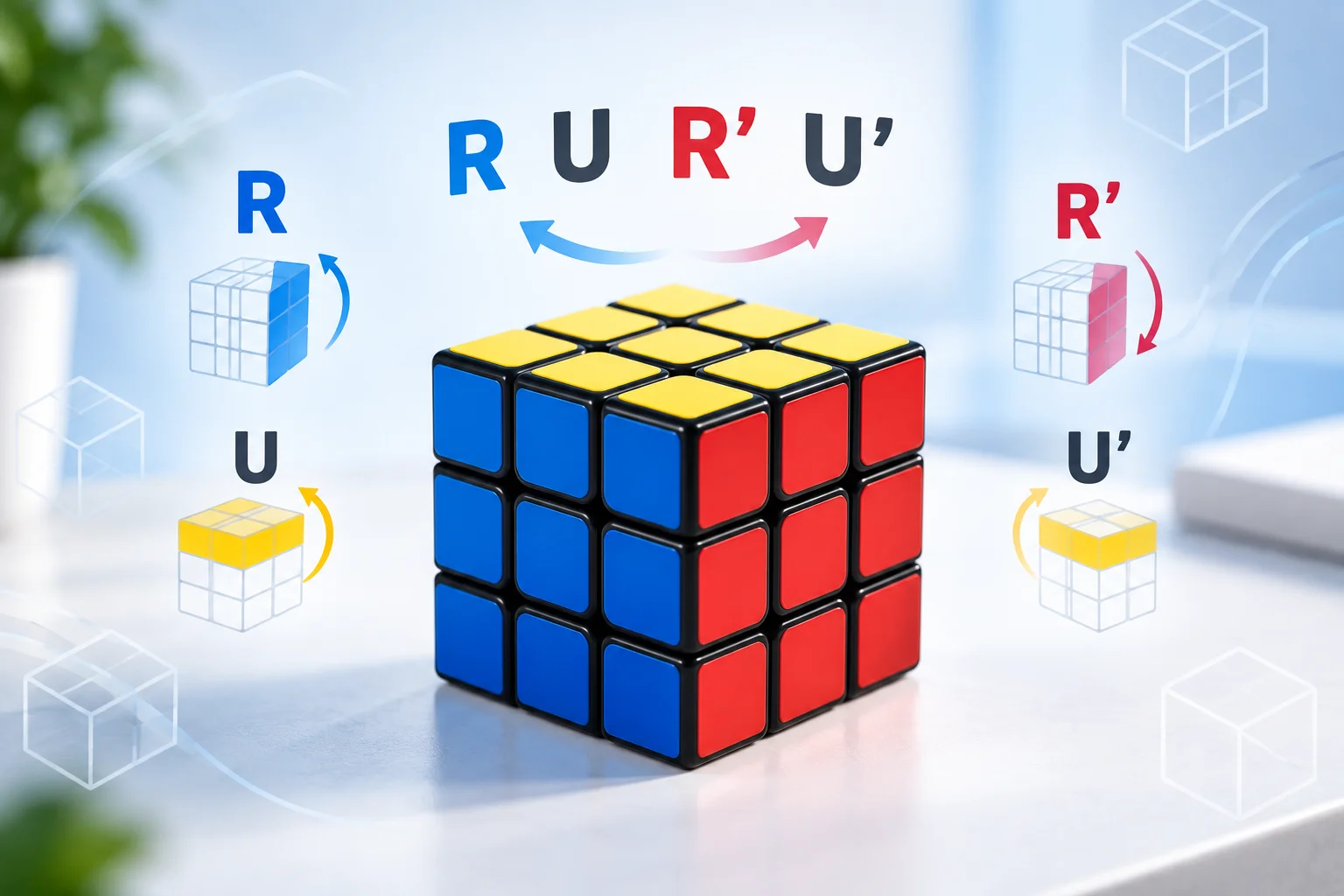
Mostly, yes. The standard notation — R, L, U, D, F, B for the six faces — applies to every numbered cube. On cubes larger than 3×3, wide moves turn two layers at once, and they are written with a lowercase letter or a 'w', such as Rw. Shape mods use their own notation because their axes are different: Pyraminx notation describes its four corner axes, and Megaminx notation uses its twelve faces. You do not need to learn every system at once — start with 3×3 notation, and the rest will make sense when you need it.
Which Cube Should You Buy Next?
If you want faster 3×3 progress, get a second 3×3 so one stays tuned for speed. If you want a new challenge, a 4×4 teaches reduction and parity, which unlocks every larger cube afterwards.
For a first shape mod, the Pyraminx is the easiest win: it is inexpensive, quick to learn, and satisfying to solve. The Skewb is a close second. If you want a long-term project, the Megaminx will keep you busy for weeks, and the Square-1 will challenge even experienced solvers.
For younger children, a 2×2 or a Pyraminx is usually the best starting point. Both are small, light, and forgiving, and a child can see real progress quickly. Avoid very large cubes for small hands — they are heavy, hard to grip, and can be discouraging before the child has learned the basics.
When buying, look for a cube that turns smoothly out of the box, with well-fitted stickers or tiles and no loose pieces. Speedcubers often prefer magnetic cubes, which use small magnets to help layers snap into alignment. You do not need the most expensive cube to learn — a smooth, reliable puzzle is more important than premium features when you are starting out.
Stuck on a new cube?
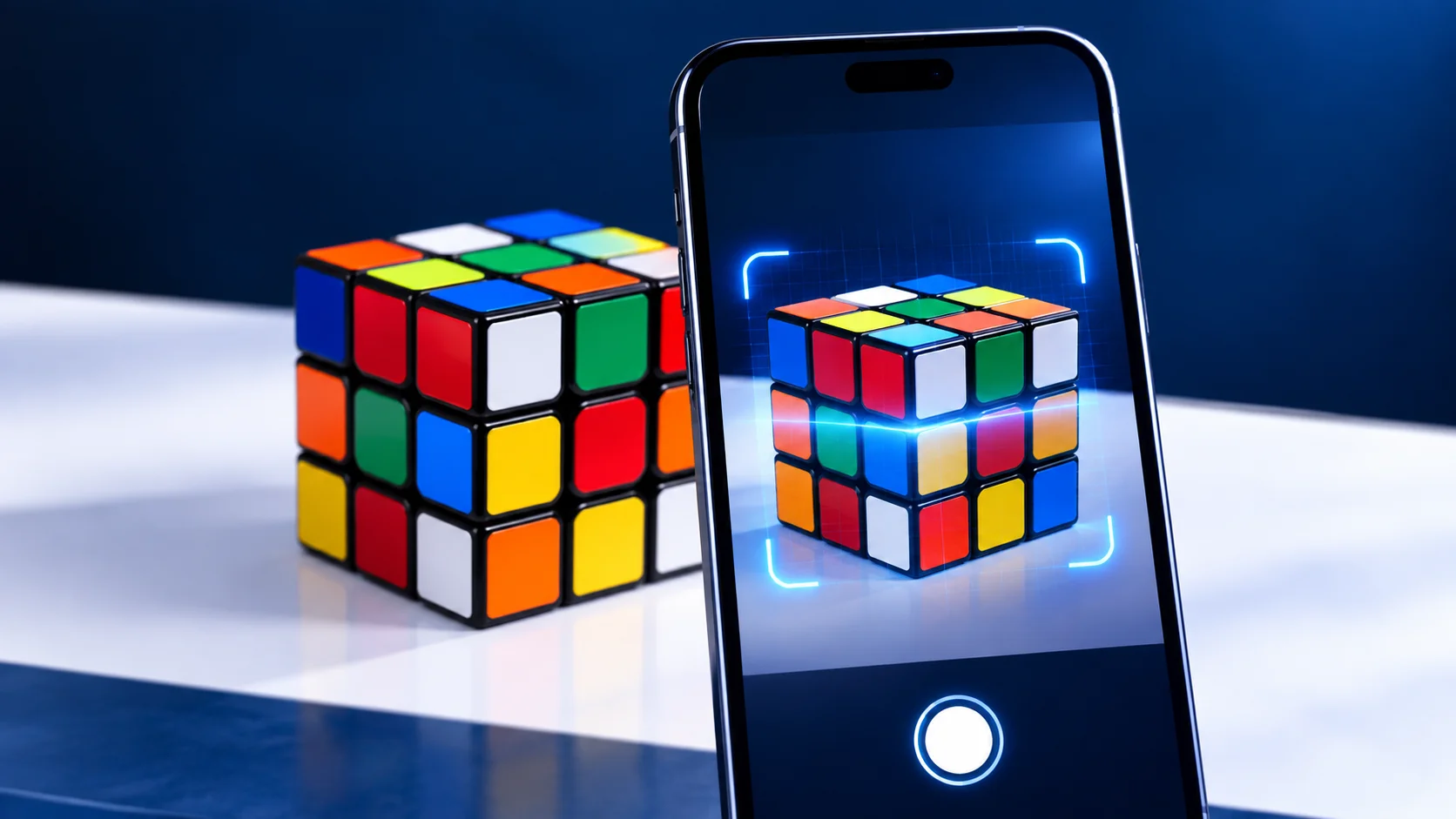
Rubik's Cube Solver gives step-by-step guidance for 2×2, 3×3, and 4×4 cubes — scan your cube or enter the colours manually.
Can an App Solve All of These Cubes?
A solver app can help with the numbered cubes it supports. Rubik's Cube Solver supports 2×2, 3×3, and 4×4 cubes: you can scan your cube or enter the colours manually, and the app provides step-by-step guidance for that cube's configuration. Shape mods like the Pyraminx and Megaminx use different mechanisms, so they are best learned with dedicated guides or by practising the patterns by hand.
Tips for Learning a New Cube
- Master one cube before collecting many — the 3×3 teaches ideas that transfer everywhere.
- Learn the new pieces first: on a 4×4, practise centres and edge pairing before full solves.
- Expect the first solves to be slow — speed comes after the method feels automatic.
- Keep the cube clean and well-tensioned so sticky pieces do not hide real mistakes.
The most important tip is patience. Every new puzzle feels confusing for the first few solves, and then the patterns start to click. If you could solve one cube, you can solve the next — it is only a matter of learning which pieces behave differently.
Frequently Asked Questions About Cube Types
Here are the questions readers ask most often about the different types of Rubik's Cubes.