Rubik's Cube algorithms can look complicated when you first see sequences such as R U R' U'. The good news is that you do not need to memorize a large collection of algorithms immediately. The easiest approach is to understand the notation first, learn what each sequence is designed to do, and then practice the moves until they become familiar.
What Is a Rubik's Cube Algorithm?
A Rubik's Cube algorithm is a specific sequence of face turns that performs a particular task. Instead of turning the cube randomly, you use a known sequence to change selected pieces while preserving as much of the solved structure as possible.
For example, an algorithm may help insert a corner, position an edge, orient pieces on the last layer, or move several pieces into their correct locations. Different solving methods use different sets of algorithms.
The key idea is simple: a move is an individual turn, while an algorithm is a sequence of moves with a specific purpose.
What Is the Difference Between a Cube Move and an Algorithm?
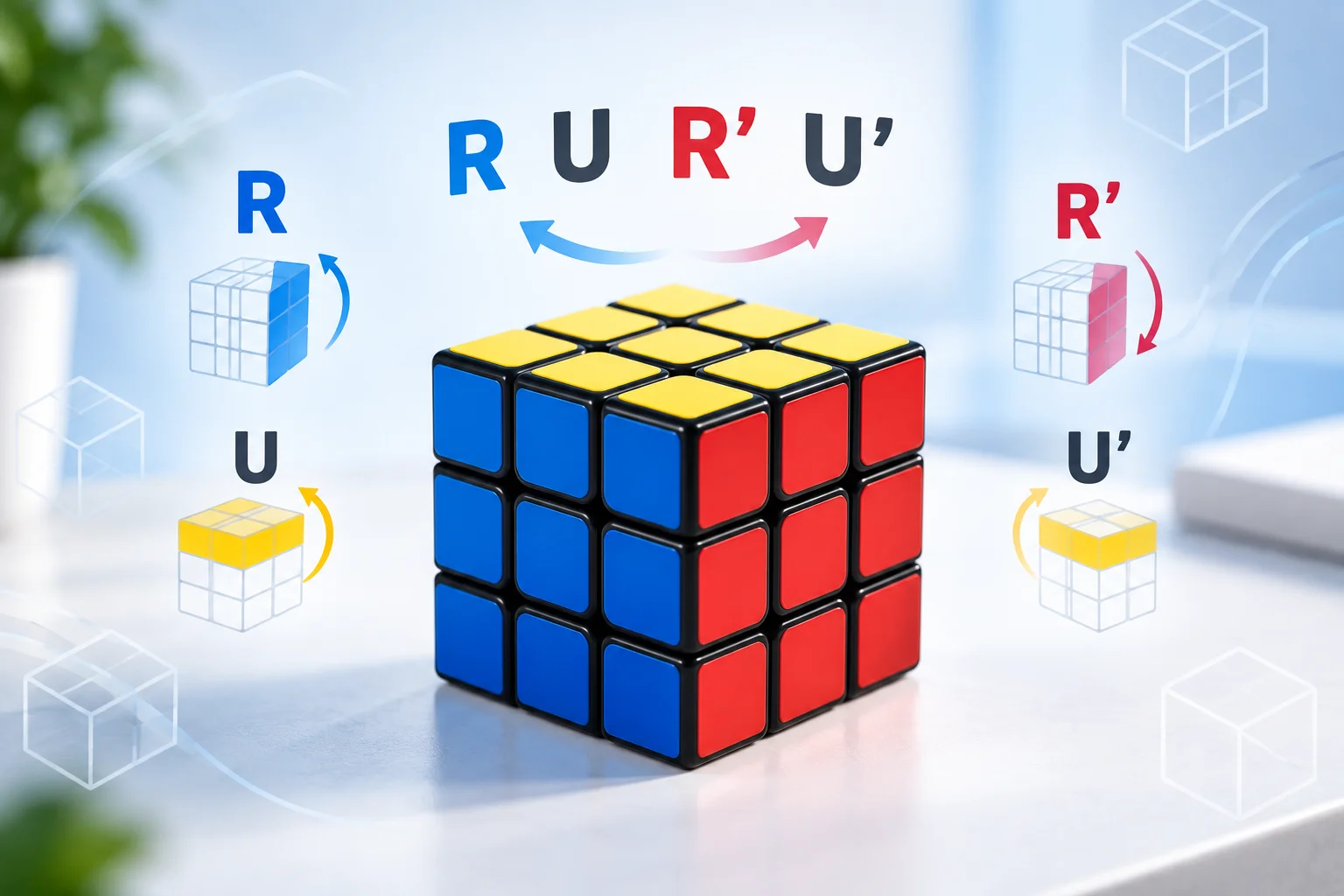
A single cube move turns one face. For example, R means turning the Right face. An algorithm combines multiple moves into a sequence that produces a predictable result.
- Move: one individual face turn.
- Sequence: several moves performed one after another.
- Algorithm: a planned sequence used to achieve a specific cube-solving purpose.
How Does Rubik's Cube Notation Work?
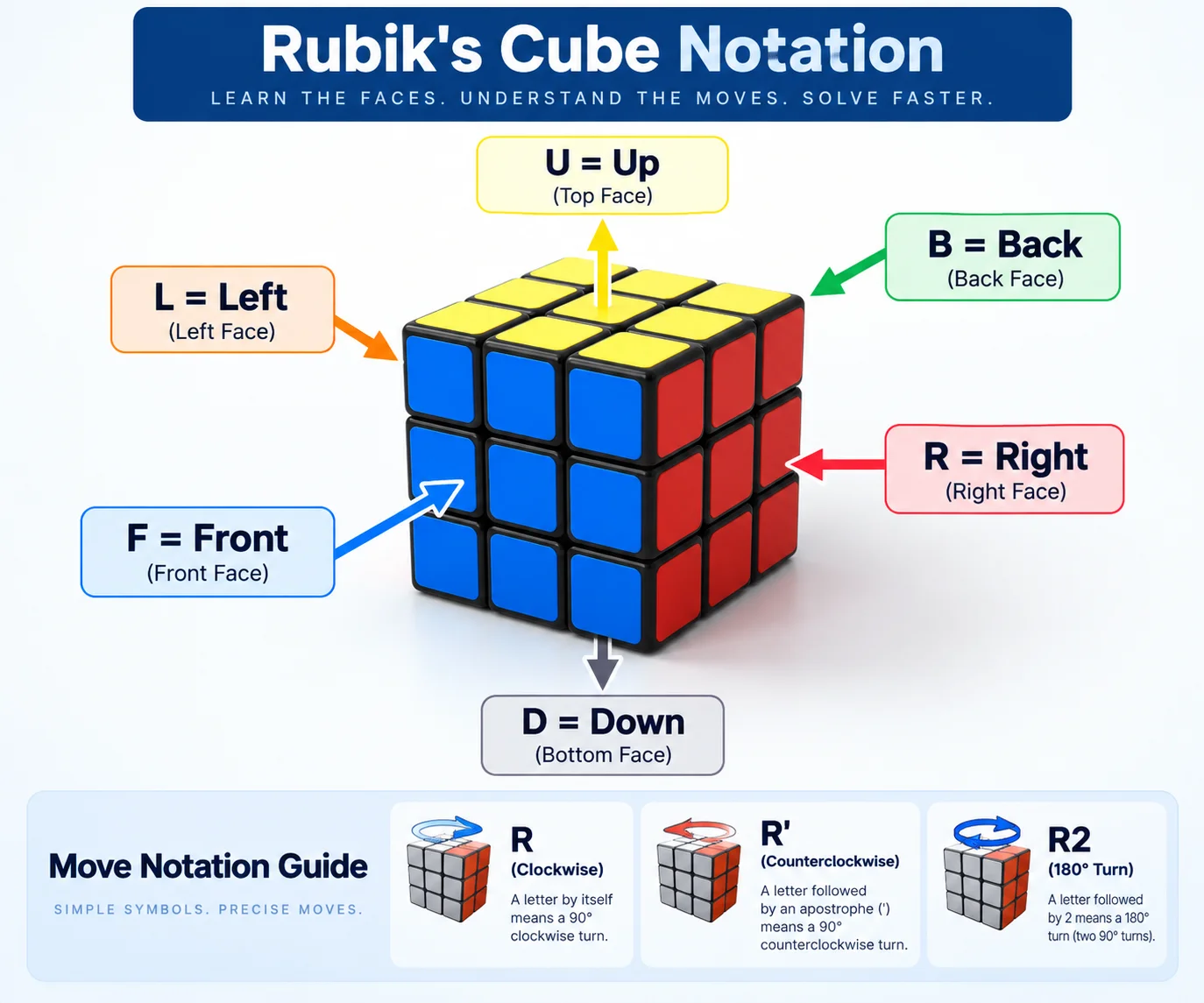
Rubik's Cube algorithms are usually written using standard face notation. The six basic letters identify the six faces of the cube.
- R = Right face
- L = Left face
- U = Up face
- D = Down face
- F = Front face
- B = Back face
A letter by itself normally represents a 90-degree clockwise turn of that face. An apostrophe means the inverse, or counterclockwise, turn. The number 2 means a 180-degree turn.
What Does R Mean?
R means turn the Right face 90 degrees clockwise when looking directly at that face.
What Does R' Mean?
R' means turn the Right face 90 degrees counterclockwise.
What Does R2 Mean?
R2 means turn the Right face 180 degrees. This is effectively two 90-degree turns of the same face.
How Do Rubik's Cube Algorithms Work?
An algorithm works by combining several face turns into a controlled sequence. Each move changes the positions or orientations of multiple cube pieces. When the complete sequence is performed, the pieces end up in a predictable configuration.
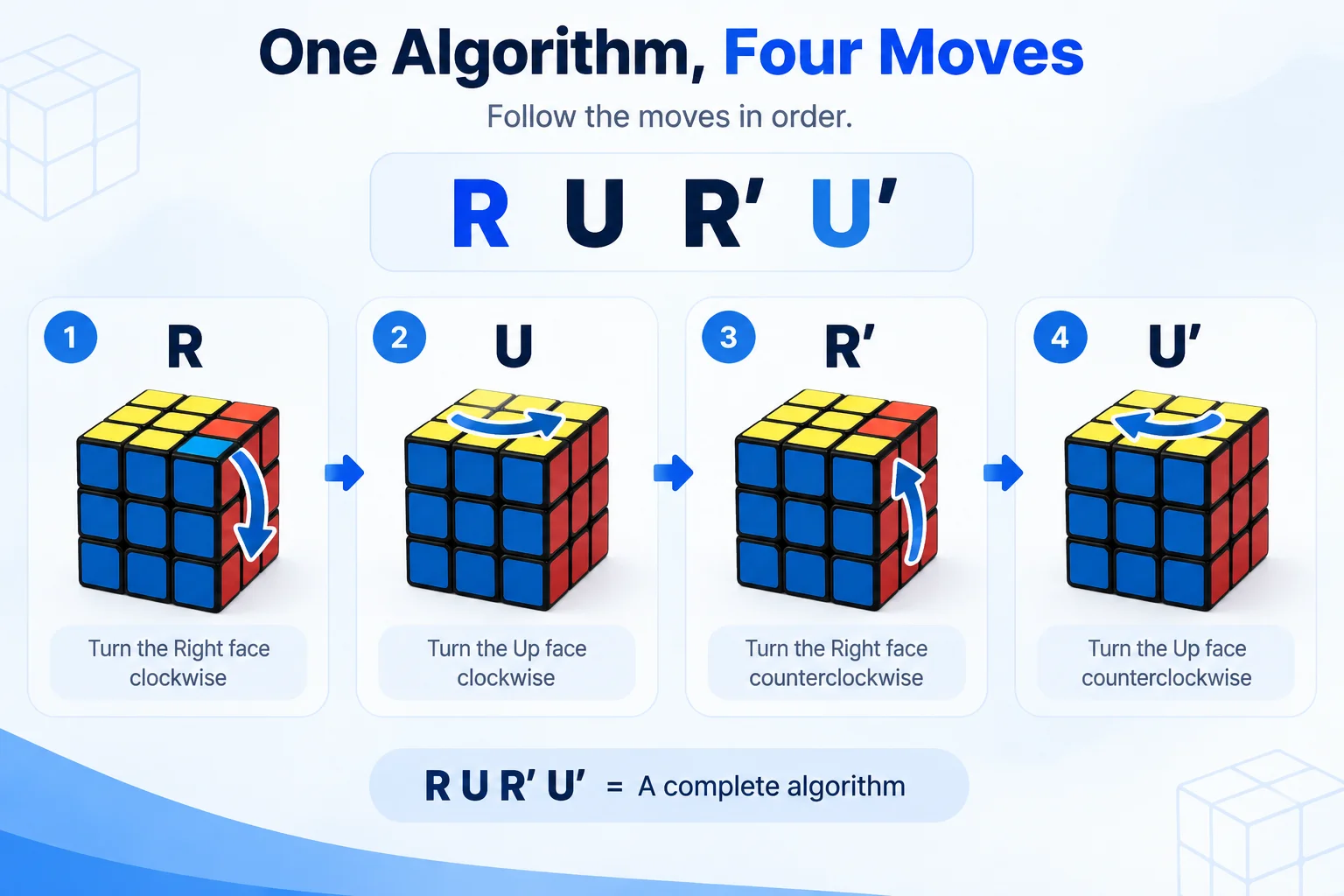
Consider the commonly encountered sequence R U R' U'. It contains four moves. The purpose of learning a sequence like this is not simply to memorize four letters. You should also understand how to recognize when the sequence is useful and how to execute it accurately.
Why Are Algorithms Important for Solving a Rubik's Cube?
Algorithms make cube solving systematic. Without a method, random turns can solve one area while disrupting another. An algorithm gives a sequence of moves a clear purpose.
- They reduce random trial and error.
- They provide repeatable solutions to specific cube situations.
- They help beginners follow structured solving methods.
- They make advanced solving methods possible.
- They create a foundation for improving speed and accuracy.
Which Rubik's Cube Algorithms Should Beginners Learn?
Beginners should not try to memorize every algorithm they encounter. Start with the sequences required by the solving method you are learning.
Corner Insertion Algorithms
Corner algorithms help place and orient corner pieces during the first layer or other stages of a solve.
Middle-Layer Edge Algorithms
These sequences help insert edge pieces into the correct positions in the middle layer of a 3x3 cube.
Last-Layer Algorithms
Once the first two layers are solved, additional algorithms can be used to orient and position the remaining last-layer pieces.
Advanced Algorithm Sets
More advanced solving methods can require substantially larger algorithm sets. Speedcubers may learn algorithms for different cases so they can recognize a situation and choose an efficient solution.
How Should You Learn Rubik's Cube Algorithms?
The most effective way to learn algorithms is to combine understanding, repetition, and recognition. Memorizing a sequence without understanding its purpose can make it harder to use correctly.
1. Learn the Notation First
Make sure you understand R, L, U, D, F, B, prime moves, and double turns before trying to memorize longer algorithms.
2. Understand the Purpose
Before practicing an algorithm, learn what it is supposed to accomplish. Knowing the purpose gives the sequence meaning instead of making it feel like a random collection of letters.
3. Break the Algorithm Into Smaller Parts
Long sequences can be easier to remember when divided into smaller movement groups. Practice each group slowly and then connect the groups together.
4. Practice Slowly
Accuracy should come before speed. Perform the algorithm slowly enough that every move is correct, then gradually make the execution smoother.
5. Practice Recognition
Learning an algorithm is only part of solving. You also need to recognize the cube situation that tells you when that algorithm is appropriate.

How Long Does It Take to Memorize a Rubik's Cube Algorithm?
There is no fixed amount of time because algorithm memorization depends on the length of the sequence, how familiar you are with cube notation, and how often you practice.
A short algorithm may become familiar after repeated practice, while larger algorithm sets can take much longer. The goal should be reliable execution rather than memorizing as many algorithms as possible.
Why Does an Algorithm Sometimes Make the Cube Look More Scrambled?
A correct algorithm can temporarily disturb pieces that were already solved. This is normal for many solving sequences. The complete algorithm is designed to produce a particular final result, so stopping halfway can leave the cube in an unexpected state.
If an algorithm appears to make the cube worse, finish the complete sequence before deciding that something went wrong. Also check that the cube orientation and every move were performed correctly.
What Are Finger Tricks in Rubik's Cube Solving?
Finger tricks are techniques used to perform cube turns efficiently with the fingers. They are especially important for speedcubing because they can reduce unnecessary hand movement.
For beginners, however, speed should not be the first priority. A useful progression is accuracy first, then recognition, smooth execution, and finally speed.
Can MyCubeSolver Help You Learn Rubik's Cube Algorithms?
MyCubeSolver can be used as a practical learning aid when you are working with a scrambled Rubik's Cube. Instead of guessing which moves to make, you can use the Rubik's Cube Solver to get step-by-step guidance for the cube configuration you are working with.
Using a solver does not mean you have to stop learning. You can use the generated solution to observe the moves, understand the solving stages, and gradually become more familiar with cube notation and algorithms.
Need help with a scrambled cube?
Use Rubik's Cube Solver to get step-by-step guidance while you continue learning how cube algorithms work.
Rubik's Cube Algorithm Learning Roadmap
If you are starting from zero, follow a simple progression rather than trying to learn everything at once.
- Learn the six basic face letters: R, L, U, D, F and B.
- Understand prime and double turns.
- Learn the algorithms required by your beginner solving method.
- Understand what each algorithm is designed to accomplish.
- Practice the sequences slowly and accurately.
- Learn to recognize when each algorithm is needed.
- Improve your turning technique and speed over time.
- Explore advanced algorithm sets after becoming comfortable with the basics.
Frequently Asked Questions About Rubik's Cube Algorithms
Rubik's Cube algorithms can seem complicated at first, but most beginner questions become easier once you understand the difference between individual moves, notation, and complete algorithms.